
Introduction
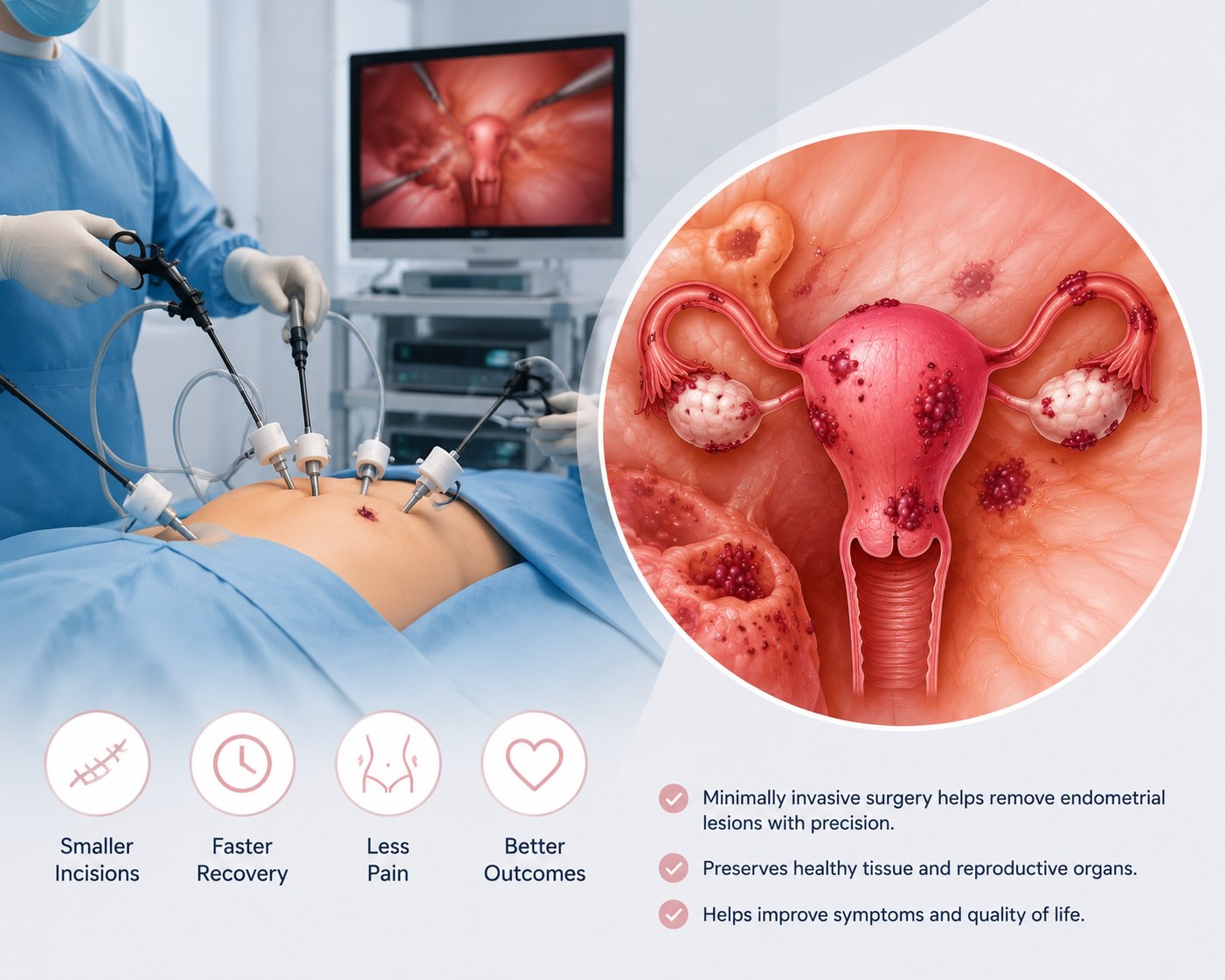
Endometriosis surgery can help women who suffer from pain and other symptoms. Today, many doctors recommend minimally invasive endometriosis surgery. This includes options like laparoscopic surgery for endometriosis. These modern methods offer several benefits over traditional open surgery. In this blog, you will learn why minimally invasive approaches matter. We will also discuss the benefits of minimally invasive gynecologic surgery and what to expect before and after the procedure.
What is Endometriosis?
Endometriosis is a condition where tissue similar to the lining inside the uterus grows outside it. This tissue can cause pain, heavy periods, and sometimes trouble getting pregnant. Often, the pain gets worse during periods. For some women, endometriosis can affect daily life. Although medicine can help, sometimes surgery is needed to remove the tissue.
When is Surgery Needed for Endometriosis?
Doctors may suggest surgery if:
Sometimes, surgery is the best way to find and treat endometriosis. However, your doctor will discuss all options before recommending surgery.
What is Minimally Invasive Endometriosis Surgery?
Minimally invasive endometriosis surgery uses small cuts instead of one large cut. For example, laparoscopic surgery for endometriosis is a common method. During this surgery, the doctor inserts a thin tube with a camera through a small cut. This allows the doctor to see and remove the endometriosis tissue. Because the cuts are small, healing is usually faster.
Benefits of Minimally Invasive Approaches
Minimally invasive gynecologic surgery offers many advantages. Some key benefits include:
Moreover, these methods often lead to better results and fewer problems. According to the World Health Organization (WHO), minimally invasive surgery is safe and effective for many women.
Risks and Considerations
Although minimally invasive surgery is safe, every surgery has some risks. For instance, there may be bleeding, infection, or injury to nearby organs. However, these risks are lower with small cuts. Your doctor will explain the risks and help you decide if this surgery is right for you.
Recovery and Lifestyle Guidance After Surgery
After minimally invasive endometriosis surgery, most women recover quickly. Here are some tips for a smooth recovery:
Usually, women can return to work or school within one to two weeks. However, everyone heals at a different pace.
Prevention and Long-Term Management
While surgery can remove endometriosis tissue, the condition may return. Therefore, long-term management is important. Your doctor may suggest:
In addition, talking with your doctor about symptoms can help catch problems early. For women in need of minimally invasive endometriosis surgery in your area, many hospitals now offer these advanced options.
Conclusion
In summary, minimally invasive endometriosis surgery offers many benefits. It can help reduce pain, speed up recovery, and lower risks. If you have endometriosis and are considering surgery, consult Dr. Neelam Negi Garg for personalized advice on endometriosis surgery options.